
Last Monday, Congressman Ed Markey spoke at a Boston Chamber of Commerce luncheon in downtown Boston. The Congressman made a point to mention the Waxman-Markey bill currently being debated in Congress, and illustrated how this bill would specifically create clean energy jobs in Massachusetts. Of course, the actual impact is still undetermined considering the bill has yet to pass both houses of Congress. Nevertheless, this important piece of legislation could determine where the US stands on climate change efforts moving forward. Surprisingly however, Congressman Markey referred to nuclear energy as a strong component to this legislation, a component that may be even stronger than wind or solar power. While nuclear energy is debatably “clean” [http://www.nei.org/keyissues] from a CO2 standpoint, it is not clean from a nuclear waste standpoint. In fact, the National Repository at Yucca Mountain in Nevada is already scheduled to receive a back log of 150 million pounds of spent nuclear fuel (DOE) and it’s already at its capacity and continues to be stuck in legal limbo. To suggest that additional nuclear energy facilities are somehow a miraculous solution ignores the trading of one waste for another. Focusing on clean, renewable energy is the only way to a truly greener environment and the only way to genuine green job creation in Massachusetts.
 Remember back in 2007 when annual sea ice hit its lowest level ever recorded and declined at a rate far surpassing scientists worst predictions? Arctic sea ice during the 2007 melt season plummeted to the lowest levels since satellite measurements began in 1979. The average sea ice extent for September 2007 was 4.28 million square kilometers (1.65 million square miles), the lowest September on record, shattering the previous record for the month, set in 2005, by 23 percent.
 Recently, Congress decided that

 Last week, ABC premiered “The Goode Family” a new animated series from Mike Judge, the creator of “Beavis and Butthead” and “King of the Hill.”
 A
A 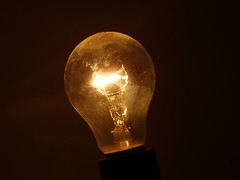 How can we measure what we can’t see? Electricity provides a particular challenge in this regard. Even though we’re told turning off lights saves energy and money, many people continue to leave lights on, unaware of how much power they’re actually consuming. What’s more, many devices we use today maintain a low-level of power usage, often referred to as “vampire power” or standby power, even when we think the device is off. Electronics such as computers, stereos and televisions are highly to blame in this regard. There is however light at the end of the tunnel. Google has recently released a new application called