

In a formal announcement scheduled for today, Holyoke MA will be named the location for a proposed green data center, a project affiliated with UMass Amherst, MIT, BU, EMC Corp. and Cisco Systems Inc. According to a recent Mass High Tech article (MHT), the center is still in the initial phases of design and, if successful, will ultimately be a “world-class green research high-performance computing center,” helping to shape the research agenda in Massachusetts.
While it is not clear how “green” such a project would be, the center’s energy claims to be cost effective due to utilizing clean power sources (MHT). The center would also be a resource for various universities involved in biotechnology and climate modeling and would marry private sector R&D with academia, a relatively unfamiliar pairing. Additionally, the project would bring new jobs in research and technology to western Massachusetts, an area of the state that could benefit greatly from new job creation. Holyoke in particular, a post-industrial paper mill city, could use the economic boost and its location alongside the Connecticut River, as well as its proximity to I-91 and high-speed data lines makes it an ideal location for this project.
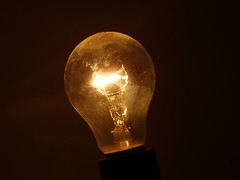 How can we measure what we can’t see? Electricity provides a particular challenge in this regard. Even though we’re told turning off lights saves energy and money, many people continue to leave lights on, unaware of how much power they’re actually consuming. What’s more, many devices we use today maintain a low-level of power usage, often referred to as “vampire power” or standby power, even when we think the device is off. Electronics such as computers, stereos and televisions are highly to blame in this regard. There is however light at the end of the tunnel. Google has recently released a new application called


 It’s Earth Day, 2009. What have you done this year to lessen your carbon footprint, save energy, and shop responsibly? I remain imperfect although I claim to be “green.” I educate myself, take public transit to work, turn off lights, shop with reusable bags and keep the heat off as much as possible. Still, is this enough? I’ve decided it’s important to not get overwhelmed and instead do what you can using the “every vote counts” motto.