
My iPhone is a pretty much constant presence in my life, from checking my email first thing in the morning to watching my nephews play with the DoodleBuddy app. But until last week, I never seriously considered its impact on the environment.
That changed when Apple published greenhouse gas emissions from its operations and products for the first time. The report, available at www.apple.com/environment, goes farther than other consumer tech companies have by accounting for product usage.
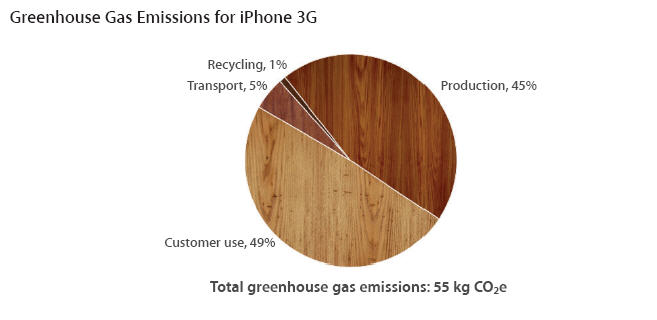
It turns out that my iPhone produces greenhouse gases equivalent to about 55kg of carbon dioxide over the full course of its lifecycle, from sourcing to recycling. My use of my iPhone produces about 27kg of carbon dioxide.
To put that in perspective, 55kg of CO2 is equivalent to burning 22 gallons of gasoline in a car or 8 propane cylinders on a backyard grill. If I planted 5 tree seedlings in my backyard tomorrow, it would take them 10 years to sequester the amount of carbon my iPhone produces.
OK, so what? Twenty-two gallons of gas and 10 trees ain’t such a bad trade given that the iPhone is… well… downright awesome.
Truly. The iPhone is one of the most successful consumer tech products in history. Apple has sold 21M iPhone units since Q3 2007, shattering sales records.
All those iPhones have produced a lot of carbon emissions, equivalent to 1.16b kg to be exact, or roughly the same amount as a coal-fired power plant in one year of operation.
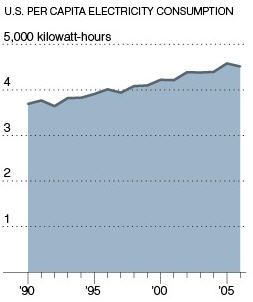
Source: New York Times
Bottom line: there isn’t enough land enough in the world to offset America’s greenhouse gas emissions from electronics by planting trees.
To halt our rising carbon emissions, America needs more than offsets. We need renewable energy alternatives at scale and stringent energy efficiency standards, especially for our electronics, “which now represent 15% of household power demand, and that is expected to triple over the next decade,” according to the New York Times and International Energy Agency.
Many are working hard to accomplish this goal. California recently proposed to ban the sale of high energy televisions. Flat-screen TVs and video game consoles can use more energy than refrigerators in some American homes today, due to a lack of mandatory efficiency standards. Massachusetts has followed suit by hearing testimony on TV efficiency.
Apple, in the same report cited above, announced that all of their desktop and laptop products now come with EnergyStar certification, an industry first. Going further, Apple also boldly withdrew from the US Chamber of Commerce, stating “Apple supports regulating greenhouse gas emissions, and it is frustrating to find the Chamber at odds with us in this effort.”
That’s a proactive step forward and a first for a major consumer brand. Other electronics manufacturers should follow Apple’s leadership.
Alex Patriquin is Founder and CEO of Digital Verdure, a digital media and sustainability company based in Cambridge, MA. Read more at his blog, DigitalVerdure.com.
 The counter culture revolution germinated the civil rights and the peace movements, but also inspired the first
  Dr. Melanie Fitzpatrick, Climate Scientist with the Union of Concerned Scientists, shared sobering data with concerned citizens at a Cambridge City Council special meeting on September 24th, as part of the city’s efforts to better understand the climate change emergency and respond at a scale proportionate to the emergency and consistent with the city’s own Climate Protection goals for 2010. Dr. Fitzpatrick emphasized that climate change is now occurring faster than the worst predictions of the IPCC (
 The Cambridge City Council is holding a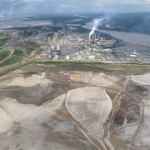
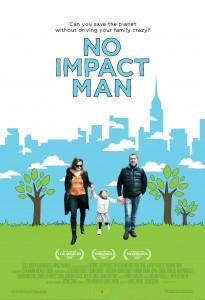 Spending three days in a meditation retreat center in western Massachusetts for labor day weekend reminded me how complex and busy my life has become in the hustle and bustle of Boston. It is easy being green out in the woods, where you are not tempted by the daily conveniences of fancy coffees, take out foods, and the countless other goodies to consume at ones whim. On a number of occasions I have lived in the countryside practicing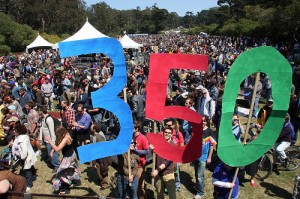
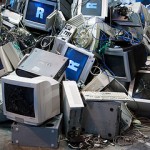 A lot of attention has been paid to the carbon footprint of automobiles, airplanes, and buildings, but one of the activities that takes up most of our time has gotten little attention: computers. In a recent article in the Economist, they covered a
  Living in Massachusetts, it is easy to take water for granted with an average rain fall of 45 inches per year. While 2009 might turn out to be an